

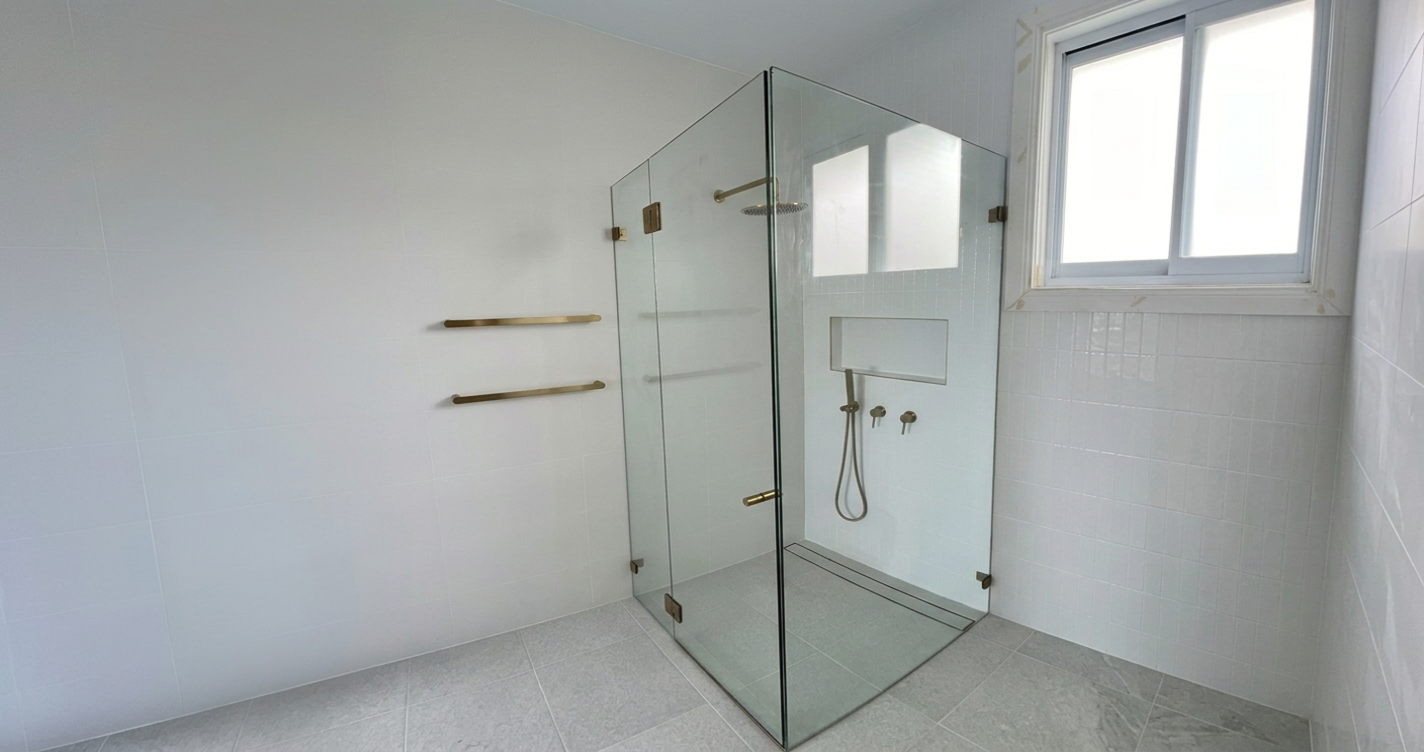
Choosing the right custom shower glass can genuinely transform your bathroom. Whether you are renovating a family home in Caringbah or fitting out a new build in Moorebank, the decision involves far more than picking a style you like. Custom shower glass in Australia must meet strict safety standards, suit your specific bathroom layout, and balance cost with long-term durability. This guide covers every practical consideration Australian homeowners face — from AS 1288 glass thickness requirements and AS/NZS 2208 compliance standards to frameless vs semi-frameless choices, installation timelines, and realistic cost ranges as of mid-2026.
Consequently, making an informed choice from the start saves you money, avoids costly rework, and delivers a bathroom that genuinely works for your lifestyle. Let’s walk through everything you need to know.
Why Custom Shower Glass Is Worth the Investment in 2026
Standard off-the-shelf shower screens rarely fit perfectly. Australian bathrooms come in wildly different shapes, and older homes in NSW especially tend to have non-standard alcove widths and unusual wall angles. Custom shower glass solves this directly. Each panel is measured, cut, and finished specifically for your space — no awkward gaps, no leaking edges, and no compromised waterproofing.
Beyond fit, custom glass offers real design freedom. You can select the exact glass type, frame style, hardware finish, and opening configuration that suits both your taste and your budget. Furthermore, custom installations typically use higher-grade glass products than budget-range pre-made screens — which matters significantly for both safety and longevity.
According to realestate.com.au, bathroom renovations consistently rank among the top three home improvements that increase property value in Australia. A well-fitted, high-quality custom shower glass screen is a visible, tangible upgrade that prospective buyers immediately notice.
Additionally, professional glaziers who specialise in shower screen installations bring compliance knowledge that protects you legally. Every shower glass installation in Australia must meet the requirements outlined in AS/NZS 2208 (Safety Glazing Materials in Buildings). Getting this wrong creates liability and potential safety hazards.
Frameless vs Semi-Frameless: Which Style Suits Your Bathroom?
The frameless shower screen vs semi-frameless debate is genuinely one of the most common questions Australian homeowners ask before purchasing. Both options have real advantages, and neither is universally better. The right choice depends on your bathroom size, your budget, your wall material, and the aesthetic you want to achieve.
Understanding the Core Difference
A frameless shower screen uses no metal framework at all. It relies entirely on thick, structurally stable glass panels — utilising 10mm toughened glass as the premium industry standard for structural stability — held in place by minimal polished hardware directly bolted to walls or floors.
A semi-frameless screen, on the other hand, uses a frame around the fixed panels but leaves the door itself frame-free. This approach allows thinner glass (typically 6mm) because the surrounding frame provides structural support. Semi-frameless options are generally more affordable and easier to retrofit into existing bathrooms.
| FRAMELESS SHOWER SCREEN • Requires minimum 10mm toughened glass • Sleek, open, modern aesthetic • Makes small bathrooms feel larger • Higher upfront cost • Easier to clean (no frame channels) • Wall anchoring must be precise • Suits contemporary bathroom designs • Low long-term maintenance | SEMI-FRAMELESS SHOWER SCREEN • Uses 6mm minimum toughened glass • More affordable option overall • Frame provides structural support • Works well in older home renovations • Frame channels can trap soap scum • Wider range of hardware finishes • Good for non-standard alcove shapes • Suitable for both modern and classic styles |
Semi-frameless screens are also the practical choice when bathroom walls are not perfectly plumb or level — a very common situation in older NSW homes. The frame accommodates minor imperfections more forgivingly than a fully frameless installation. Frameless screens, therefore, demand more precise wall preparation and a perfectly levelled substrate.
For homeowners exploring custom shower screen options across NSW, understanding these structural differences helps you have a more productive conversation with your glazier before any measurements are taken.
Glass Thickness Requirements for Australian Shower Screens
Shower glass thickness requirements in Australia are not optional — they are governed by the National Construction Code (NCC) and AS/NZS 2208. Choosing the wrong thickness is not merely a design error; it creates a genuine safety hazard and will likely fail any building compliance inspection.
Importantly, heavier glass is not simply a luxury choice. Thicker panels flex less under load, create better acoustic dampening, and feel substantially more solid when you interact with the door. In practical terms, a 10mm frameless screen feels entirely different in use compared to a 6mm semi-frameless unit — and most homeowners who upgrade notice the difference immediately.
Why Toughened Glass Is Non-Negotiable for Shower Screens in Australia
Toughened glass — also called tempered glass — undergoes a controlled thermal process that makes it significantly stronger than standard float glass. According to Wikipedia’s entry on toughened glass, the tempering process creates surface compression that makes the glass approximately four to five times stronger than untreated glass of the same thickness.
More critically, when toughened glass does break, it shatters into small, relatively blunt granular fragments rather than large sharp shards. This property makes it dramatically safer in a bathroom environment where bare feet, wet surfaces, and enclosed spaces combine to create real injury risk from ordinary glass breakage.
The Australian Building Codes Board (ABCB) mandates toughened safety glass in all wet area glazing applications. There is no compliant alternative for custom shower glass installations in Australia. Any glazier offering to fit untreated or standard float glass in a shower screen is operating outside Australian law.
Spontaneous Glass Breakage — What You Should Know
A small percentage of toughened glass panels can spontaneously shatter due to nickel sulphide inclusions — microscopic impurities introduced during the manufacturing process. This risk is rare but real. Heat soaking is an additional processing step that stress-tests glass and reduces spontaneous breakage risk significantly. If you want maximum peace of mind, ask your glazier specifically whether heat-soaked toughened glass is available for your project.
For most standard residential custom shower glass installations, standard toughened glass is perfectly appropriate and widely used across NSW without issue.
Walk-In Shower Glass Screen Ideas for Australian Bathrooms
Walk-in shower designs have grown enormously popular across Australia over the past five years. They suit both compact ensuites and larger main bathrooms, and they eliminate the need for a hinged door entirely. The glass panel acts as a simple, elegant splash barrier — typically positioned at one end or along one side of the shower area.
The core advantage of a walk-in configuration is accessibility. There are no doors to navigate around, which is especially practical for older residents or anyone with mobility considerations. Moreover, the open design creates a genuinely spa-like atmosphere that feels luxurious in any bathroom size.
Walk-In Configuration Options
- Single fixed panel: One straight glass panel along one side of the shower. Minimal hardware, maximum visual openness. Best suited to larger bathrooms with adequate floor drainage.
- L-shaped configuration: Two panels meeting at a corner, providing splash protection on two sides without enclosing the entry. Ideal for narrow bathroom layouts.
- Wet room design: Entire shower area defined by a sloped floor and single glass screen. Completely open entry with the screen positioned purely as a water deflector.
- Return panel design: A primary panel plus a short return panel at one end. This variation controls water spray more effectively while retaining the open aesthetic.
One important practical point: walk-in showers require excellent waterproofing beneath the floor membrane and a well-designed drainage slope. The glass screen itself does not fully contain water the way a conventional shower enclosure does. Therefore, proper bathroom waterproofing is essential — particularly in timber-framed homes common across NSW.
Frosted and textured glass finishes are also available for walk-in screens where privacy is a priority. Etched patterns, fluted glass, and satin-finish options all provide various degrees of visual obscuring while maintaining the benefits of a glass surface.
Shower Niche Glass Panel Options for a Polished Finish
A shower niche — a recessed shelf built into the shower wall — is increasingly standard in Australian bathroom renovations. Fitting a custom glass panel to front or enclose a niche adds a level of refinement that distinguishes a well-designed bathroom from a standard one.
Shower niche glass panel options include clear toughened glass for a clean, modern look, frosted glass for a softer aesthetic, coloured glass for a design statement, and mirrored glass for functional use within the niche itself. The glass thickness for niche panels typically ranges from 6mm to 10mm depending on panel dimensions.
These panels must also comply with AS/NZS 2208 — even though they sit within a recessed wall opening rather than spanning a floor-to-ceiling shower enclosure. Any glass in a wet area is subject to safety glazing requirements under Australian law. Furthermore, the silicone sealing around niche panels requires careful attention to prevent water ingress behind the tiles.
When planning your niche, discuss dimensions with your glazier before the tiling begins. Glass panels for niches are measured and cut to exact dimensions. If the tiling is completed first and the measurements are slightly off, you may need an entirely new panel — a costly and avoidable mistake.
The Toughened Glass Shower Screen Installation Process in NSW
Understanding the toughened glass shower screen installation process helps you plan your bathroom renovation timeline accurately. The process is not simply about fitting glass to walls — it involves precise measurement, product fabrication, site preparation, and compliance verification.
On-Site Measurement
A glazier visits your property and takes precise measurements of the shower recess or alcove. Wall plumb, floor level, and tile thickness are all assessed at this stage. Accurate measurement is the foundation of every successful custom installation.
Glass Fabrication
Your glass panels are cut, edge-polished, drilled for hardware, and sent through the toughening (tempering) furnace. This process cannot be reversed — toughened glass cannot be cut after tempering. Lead time is typically 5 to 10 business days for custom orders in NSW.
Wall Substrate Preparation
Before installation day, your walls should be fully tiled and waterproofed. Hinge and channel anchor points must be identified. Hollow tiles, poor waterproofing, or uneven surfaces can delay or complicate installation significantly.
Hardware and Frame Fitting
Wall channels, pivot hinges, standoff brackets, or floor channels are fitted first. Hardware is anchored securely into wall studs or appropriate wall anchors — never into tile grout alone.
Glass Panel Installation
Panels are lifted into position and secured. Heavy frameless panels (10mm or 12mm glass) can weigh 30kg or more — two installers are standard for safety and accuracy at this stage.
Silicone Sealing
All perimeter joints between glass and tile surfaces receive a professional-grade sanitary silicone bead. This waterproofs the screen perimeter and allows minor movement without cracking. Silicone cures for 24 to 48 hours before the shower is used.
Final Inspection and Handover
A reputable glazier will confirm installation compliance with AS 1288 and provide a mandatory NSW Glazing Certificate of Compliance for your council, builder, or insurance records.
The total installation visit typically takes between 2 and 4 hours for a standard shower screen configuration. More complex projects — such as large frameless walk-in screens or multi-panel enclosures — can require a full day. After silicone curing, your shower is ready to use within 48 hours of installation.
For reliable bathroom glass installation across NSW, working with an experienced local glazier who is familiar with regional council compliance requirements protects both your investment and your safety.
Shower Glass Replacement vs New Installation: Making the Right Decision
Many Australian homeowners face a straightforward but genuinely important question: should you replace an existing shower screen, or is a complete new custom installation more practical? The answer depends on the condition of your current installation, your bathroom layout, and your renovation budget.
When Shower Glass Replacement Makes Sense
Glass-only replacement is appropriate when the existing frame and hardware are structurally sound and undamaged. If a single panel has been broken or cracked but the surrounding frame remains solid and level, replacing just the glass is significantly more cost-effective than a full installation. Similarly, if you are simply upgrading to thicker or clearer glass without changing the screen configuration, replacement is the smarter financial choice.
When a Full New Installation Is the Better Choice
Conversely, full replacement becomes necessary when the existing frame is corroded, bent, or inadequately anchored. Older aluminium frames in Sydney homes are frequently affected by salt air corrosion, particularly in coastal areas such as Caringbah South and surrounding suburbs. Moreover, if the existing screen does not meet current AS/NZS 2208 standards, replacement with a fully compliant custom installation is both the legal and practical path forward.
A complete new installation also makes sense when you want to change the configuration entirely — for example, moving from a semi-frameless screen to a fully frameless walk-in design. Attempting to retrofit new glass into an old frame of a different style rarely produces satisfactory results.
Custom Shower Glass Cost in Australia: What to Budget in 2026
Pricing for custom shower glass in Australia varies considerably based on screen type, glass thickness, hardware choice, bathroom complexity, and your location within NSW. The following ranges are indicative of mid-2026 market pricing across the Sydney metropolitan area and surrounding NSW regions. Always obtain at least two to three written quotes before committing to a supplier.
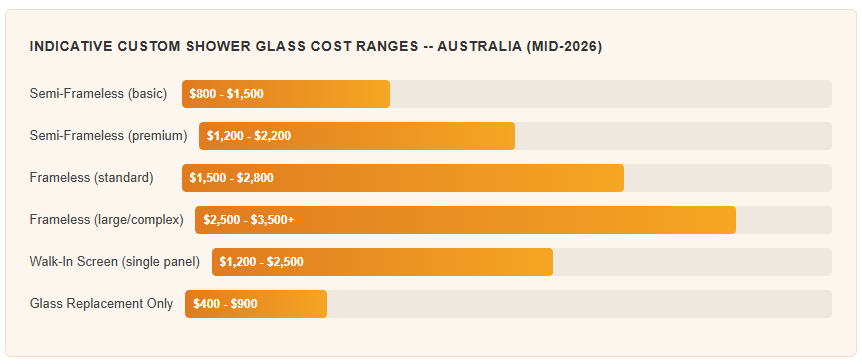
Pricing Disclaimer: The above ranges are indicative estimates based on general market conditions in the Sydney, NSW region as of mid-2026. Actual prices will vary based on your specific measurements, glass type, hardware selection, wall condition, site access, and individual supplier pricing. All figures include supply and professional installation labour but exclude plumbing work, tiling, or waterproofing. Obtain written quotes from your glazier before committing. Shine Glass provides obligation-free measures and quotes — contact us directly for accurate project pricing.
Factors That Affect Your Final Price
- Glass thickness: 10mm and 12mm panels cost more to fabricate and handle than 6mm glass.
- Panel size: Larger panels use more material and require more care during handling and installation.
- Hardware finish: Brushed nickel, matte black, and polished chrome all vary in price. Some specialty finishes carry premium costs.
- Configuration complexity: Corner screens, angled walls, and multi-panel enclosures require more fabrication time and on-site effort.
- Glass coating: Hydrophobic coatings (such as Nanotex or similar) add to the upfront cost but reduce cleaning effort significantly over the screen’s lifetime.
- Access difficulty: Narrow hallways, upper-floor bathrooms, and tight alcoves can increase labour time.
Keeping Your Custom Shower Glass Looking Pristine
One of the genuine long-term advantages of a frameless custom shower glass screen is how much easier it is to maintain compared to a framed unit. Without aluminium channel sections trapping soap scum and hard water deposits, cleaning is dramatically simpler.
Daily Habits That Prevent Buildup
Using a squeegee immediately after each shower removes the majority of water from the glass surface before limescale or soap residue has any chance to dry and bond. This single habit alone extends the time between thorough cleans dramatically. Additionally, improving bathroom ventilation — either through an exhaust fan or window opening — reduces the overall moisture level that contributes to glass fogging and organic residue buildup.
Cleaning Methods That Actually Work
- Use a spray of white vinegar diluted 1:1 with water for hard water spots. Apply, leave 5 minutes, then wipe with a non-abrasive microfibre cloth.
- Avoid abrasive scrubbing pads entirely. They micro-scratch the glass surface, making it more susceptible to staining in the future.
- Apply a hydrophobic glass coating every 6 to 12 months. These products cause water to bead and run off the surface rather than sitting and drying on the glass.
- Check silicone seals every 12 months. Cracking or discolouring silicone should be replaced promptly to prevent water ingress behind tiles.
- Clean hinges and handles with a damp cloth only. Harsh chemical cleaners can damage polished or matte hardware finishes over time.
Hard water is a reality across much of NSW. Sydney’s water supply contains moderate levels of dissolved minerals, and in some outer suburbs, calcium and magnesium concentrations are high enough to leave visible deposits within days. A quality hydrophobic coating genuinely makes a measurable difference in these areas, and the investment is relatively minor compared to the effort of heavy-duty cleaning every week.
The services offered across Shine Glass extend well beyond shower screens. If you are also planning a bathroom makeover that includes a glass splashback or mirror installation, coordinating both projects at the same time typically reduces overall installation costs and scheduling complexity.
Frequently Asked Questions About Custom Shower Glass
Can I install my own shower glass?
Technically possible, but strongly discouraged. Australian standards require toughened safety glass certified under AS/NZS 2208, alongside precise layout and thickness constraints mandated by AS 1288. Incorrect fitting risks serious injury and will fail compliance inspections. Professional installation is the safe and legally sound approach.
How much does it cost to install custom shower glass in Australia?
As of mid-2026, costs typically range from $800 for a basic semi-frameless screen to $3,500 or more for a large frameless custom installation in NSW. Pricing depends on glass thickness, screen type, panel size, and hardware choice. Always request itemised written quotes.
How long does it take to install a custom glass shower door?
Most professional installations take between 2 and 4 hours on-site. Complex frameless or multi-panel configurations may require a full day. Add 24 to 48 hours for silicone curing before first use. Glass fabrication lead time is typically 5 to 10 business days.
Is it difficult to install glass shower doors?
Yes. Precision measurement, correct wall anchoring, and the physical handling of heavy toughened glass panels all require professional expertise. Frameless panels at 10mm or 12mm thickness can weigh 30kg or more. Errors lead to leaks, instability, and potential breakage.
How much will a plumber charge to install a shower in Australia?
Australian licensed plumbers typically charge $80 to $150 per hour as of mid-2026. Full shower plumbing installation — including waste, supply connections, and shower rose fitting — can range from $500 to $1,500 depending on scope and complexity. Glass installation is separate from plumbing.
What are the disadvantages of frameless shower doors?
Frameless doors cost more upfront than framed or semi-frameless alternatives. They require thick glass (minimum 10mm), demand precisely prepared walls, and can develop minor leaks if silicone sealing is not applied correctly. They also need more careful handling during installation due to panel weight.
Can I install a shower myself in Australia?
Plumbing work must be performed by a licensed plumber under Australian law.Glass installation should also be handled by a professional glazier to ensure compliance with AS 1288 installation standards. DIY shower glass installation creates both safety and legal risks.
What is the average labour cost to install a shower screen?
Labour for shower glass installation in NSW typically ranges from $300 to $900 as of mid-2026, depending on screen complexity and site conditions. This is separate from the cost of the glass and hardware themselves.
What glass thickness is required for shower screens in Australia?
Under AS 1288, premium residential frameless shower screens typically utilize a 10mm thickness to ensure structural stability. Semi-frameless screens require at least 6mm toughened glass when fully framed around the perimeter, with all materials certified as Grade A safety glass under AS/NZS 2208.
How do I maintain frameless shower glass?
Squeegee the glass after every shower, apply a hydrophobic coating every 6 to 12 months, and clean with diluted white vinegar for hard water deposits. Avoid abrasive scrubbing pads. Check and replace silicone seals annually to prevent water ingress.
Is toughened glass the same as tempered glass?
Yes. Toughened glass and tempered glass are the same product. Both terms describe glass that has undergone a controlled heat treatment process making it approximately four to five times stronger than untreated glass, and causing it to shatter into small blunt granules rather than sharp shards.
How long does a frameless shower screen last?
A well-installed frameless shower screen using quality toughened glass and stainless-grade hardware can last 15 to 20 years or more with appropriate maintenance. Hardware seals and silicone will require periodic replacement during that period.
Final Thoughts: Getting Custom Shower Glass Right the First Time
Investing in custom shower glass is one of the most impactful upgrades you can make to an Australian bathroom. Done well, it delivers lasting visual appeal, practical daily function, genuine compliance with Australian safety standards, and measurable added property value. Conversely, cutting corners on glass thickness, choosing a non-compliant product, or attempting DIY installation creates problems that inevitably cost more to fix than the savings made upfront.
Whether you are choosing between frameless and semi-frameless options, planning a walk-in shower screen, exploring shower niche glass panels, or simply replacing an ageing screen that no longer performs, the fundamentals remain consistent: use compliant toughened safety glass, measure precisely, install professionally, and maintain regularly.
The Shine Glass team works with homeowners across Sydney and NSW — from Caringbah South to Moorebank and beyond — to deliver custom shower glass installations that meet Australian standards and actually look the way the homeowner envisioned. Beyond shower screens, the team also installs glass pool fencing, glass balustrades, and glass splashbacks and mirrors — making it straightforward to coordinate your entire glass installation project through a single experienced team.
Above all, start with an accurate measure and an honest conversation with your glazier about what you want to achieve. The right custom shower glass solution exists for every budget, every bathroom size, and every aesthetic preference. The key is working with a glazier who will tell you the truth about what is practical, compliant, and worth the investment for your specific situation.
